
Wild Horses
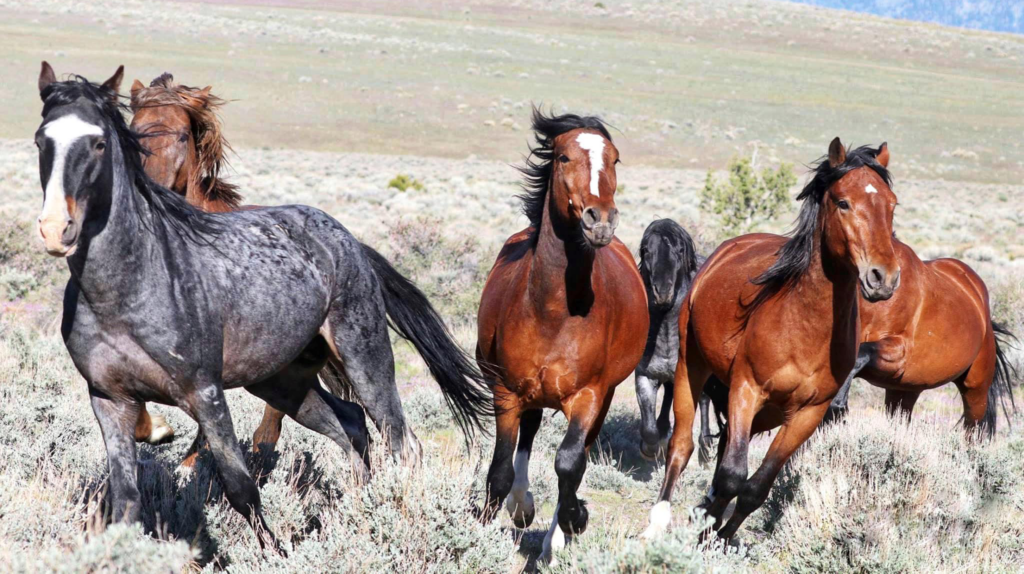
Photo credit: Cheryl Broumley
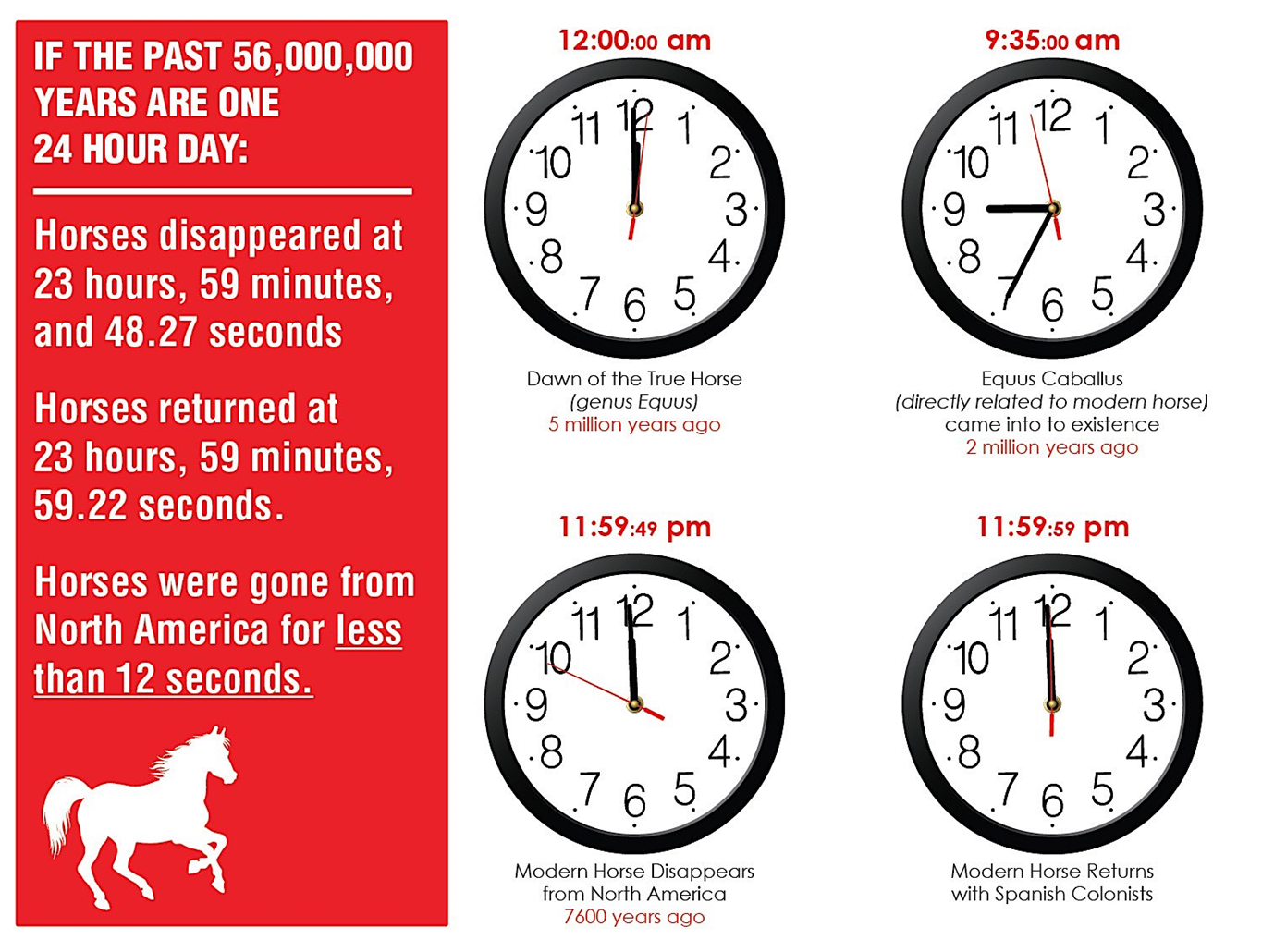
Before human footprints marked the soil of what would be the American West, native wild horses had already survived three ice ages, millions of plant-eating competitors and prehistoric predators.
How? By their ability to adapt.
Horses evolved from fox-size to the horses we know today because they adapted to every environment across the Americas. Survival meant horses’ soft-toed feet and small eyes turned into hard hooves and the largest eyes of any land mammal. Those eyes, located on the sides of their heads, meant they could eat and spot danger at the same time. The length of their legs and coats adapted to where they lived. Some became short and shaggy. Others lean and long. Their palates appreciated forage spread across their vast homelands from the Arctic to the tip of South America.
America’s wild horses and millions of other large animals suffered a die-off at the end of the Third Ice Age. Climate change made food scarce. Weakening horses travelled long distances and battled other herbivores for each mouthful. Some hardy bands of horses headed north to survive the third Ice Age in Asia. Others stayed in North America and died there. As plants vanished, famine claimed the plant-eaters. Without them, meat-eaters starved, too.
Did America’s wild horses go extinct? Maybe. Modern science has made us rethink what we “know.” Carbon dating and DNA testing of fossils prove the Americas were not empty of horses for millions of years, as we once thought. Horses were gone for – at most – eight thousand years. As research and exploration continue, we may discover remains of horses whose lives bridged the missing years between ancient equines and horses re-introduced by Spanish explorers and colonists in the 1490’s.
The Virginia Range and Calico Mountains Mustangs
The wild horses in the PHANTOM STALLION books are the horses of Northern Nevada, the ones that live closest to Terri Farley
The stories of the Virginia Range and Calico Mountains mustangs are typical of many wild horse herds across the American West and they stretch back to California’s Spanish colonial period.
Whether wild horses had always had a home on the range or were an introduced native species, they were a common sight on mission and rancho lands 1697-1821. Rancheros captured and interbred the horses they called mustangs (drifters) with Spanish horses to bring New World excitement to the practice of jineta” the kind of horsemanship glorified in the legend of Zorro, that emphasized grace, balance and speed.
Trained and ridden by virtually enslaved Native American vaqueros, these valuable horses became a means of escape. Soon, a pipeline of stolen horses ran from Southern California, through Nevada to Oregon.
Vaqueros weren’t the only ones to claim their freedom. The stolen horses joined generations of mustangs throughout the West, surviving just as they had in prehistoric times, by adapting to deserts, forests and snowy mountains.
Nevada’s Soldier Meadows is at the edge of the Black Rock Desert which is now famous for the Burning Man Festival, but it was once a Civil War remount station. There, horses were trained horses to replace those killed died on bloody battlefields. Descendants of hot blooded officers’ mounts and heavy horses schooled to pull cannons can be recognized in the Calico and Granite Range mountains.
The Pony Express, farmers and ranchers recognized the native hardiness and intelligence of mustangs. They were considered a renewable resource of the Western rangelands until America’s equestrian society gave way to mechanization.
Although this rugged and romantic heritage gave us the Virginia Range and Calico horses, they were nearly lost by 1950 when men discovered another way to reap the riches of the Nevada range. Pilots of small aircraft spotted wild horses from the air, zoomed down to chase them out of hiding and pursued them for miles. Once the mustangs slowed to stumbling exhaustion, a ground crew took over. They roped and dragged the horses into truck beds. Bewildered and injured, they were hauled to factories where they were processed as dog and chicken food.
Know the Facts
Click to enlarge
Learn what’s happening to wild horses today by following Terri Farley’s social media accounts and check out the websites below for news, statistics and resources. If you are working on a wild horse report, these are good sites to visit.
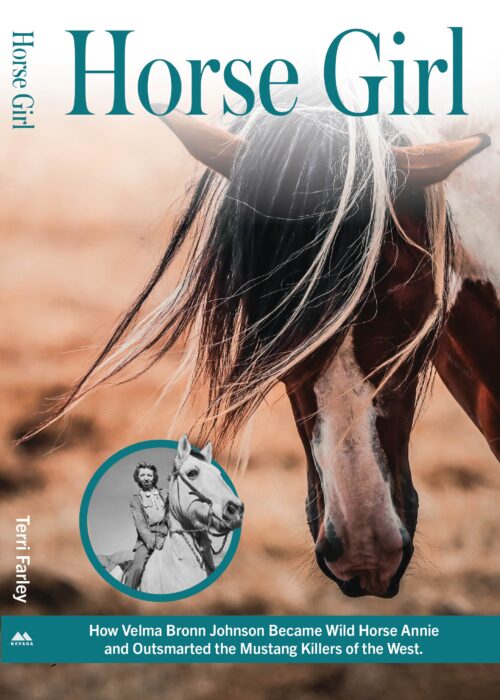
Wild Horse Annie
The Virginia Range and Calico mustangs might have vanished if a Nevada rancher named Velma Bronn Johnson hadn’t taken a stand. That’s why Terri Farley wrote a book about her!
Velma had loved horses growing up, but she didn’t have horses of her own until she was grown up and worked to buy a ranch. Affording a ranch wasn’t easy, so she had a job in town, too.
She was driving to her every day job as a secretary when she got stuck behind a slow-moving truck and suddenly realized it was packed with bloody mustangs.
Velma learned wild horses were being rounded up – legally – and sold for dog food. Shy but determined, she fought the government, miners and livestock ranchers to end the cruel money-for-meat roundups. They threatened her, spent lots of money to fight her and even called her names — “Wild Horse Annie” was a reference to her polio-changed face – but she didn’t give up.
Velma realized “A woman fighting a man’s battle in a man’s world…has three strikes against her to begin with,” so, she turned to children, reminding them and their voting parents that the wild horses and public lands were treasures that belonged to all Americans! Fighting together, they won many battles for wild horses.
Mustang advocates continue to fight wild horse roundups. Although the Bureau of Land Management is still governed by some of Wild Horse Annie’s victories, the state of Nevada isn’t.
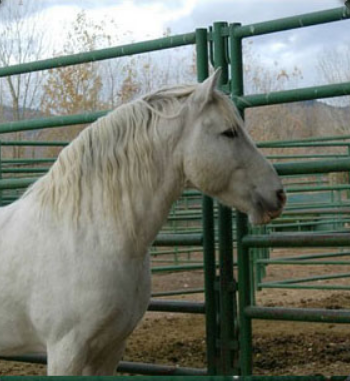
photo credit: Terri Farley
The real Phantom Stallion was captured on the Virginia Range by the Nevada Department of Agriculture. It was legally allowed to sell him and his family for slaughter. Before that could happen, Terri joined a group of wild horse advocates to release the Phantom and his lead mare Shy on 5,000 fenced acres in Northern California at the Wild Horse Sanctuary.
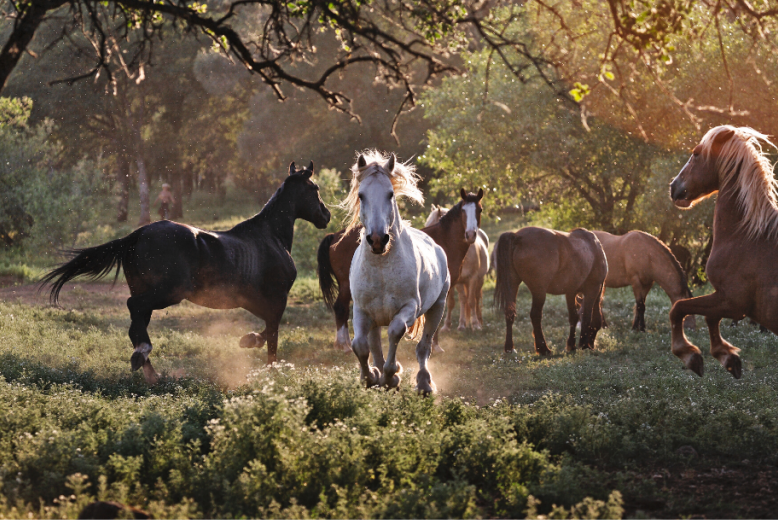
Photojournalist Melissa Farlow was working for National Geographic Magazine, photographing rescued mustangs at the Wild Horse Sanctuary when the Phantom charged her. Photo credit: Melissa Farlow